What you will be able to do
इस पाठ के बाद आप क्या कर सकेंगे
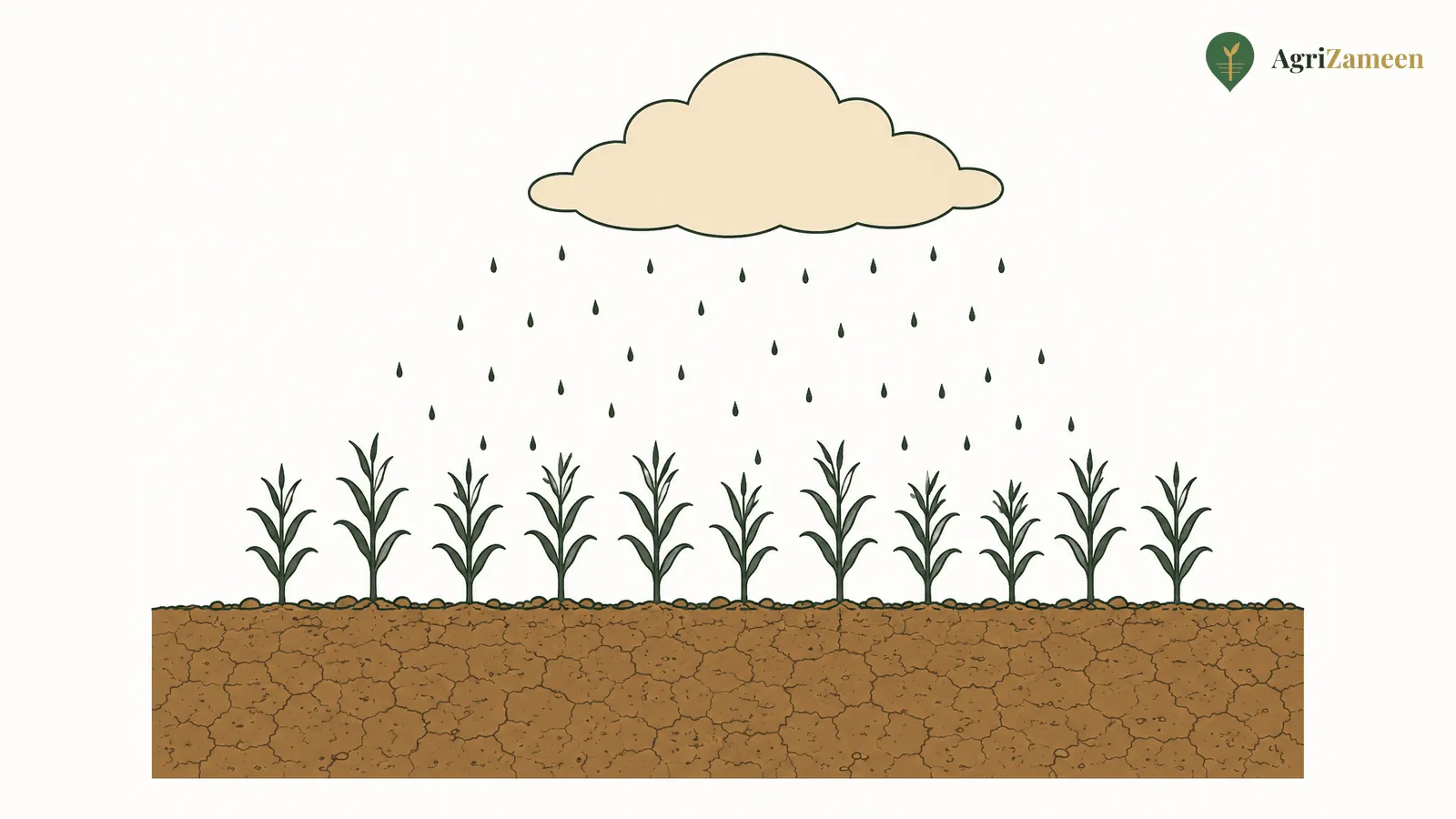
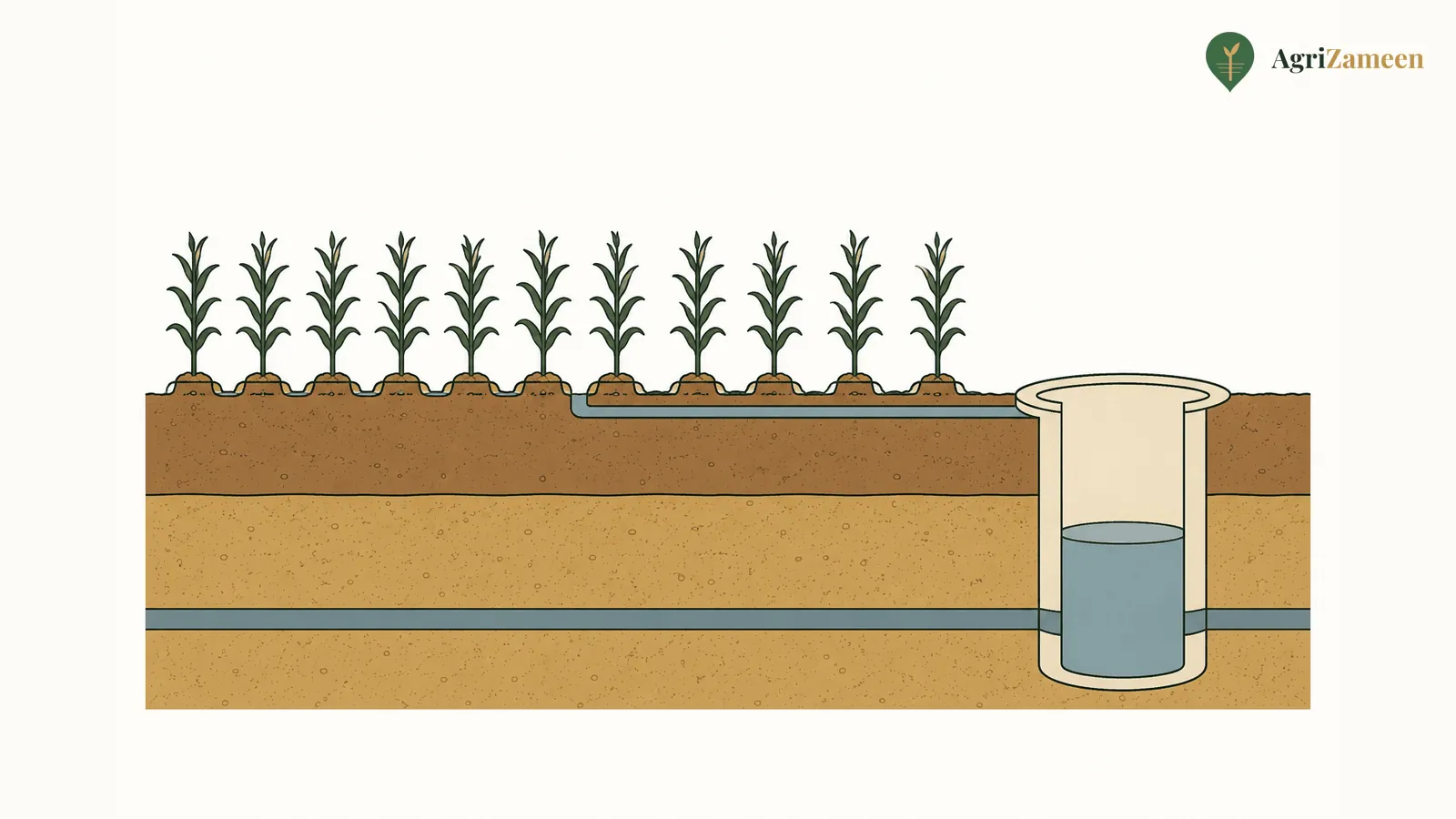
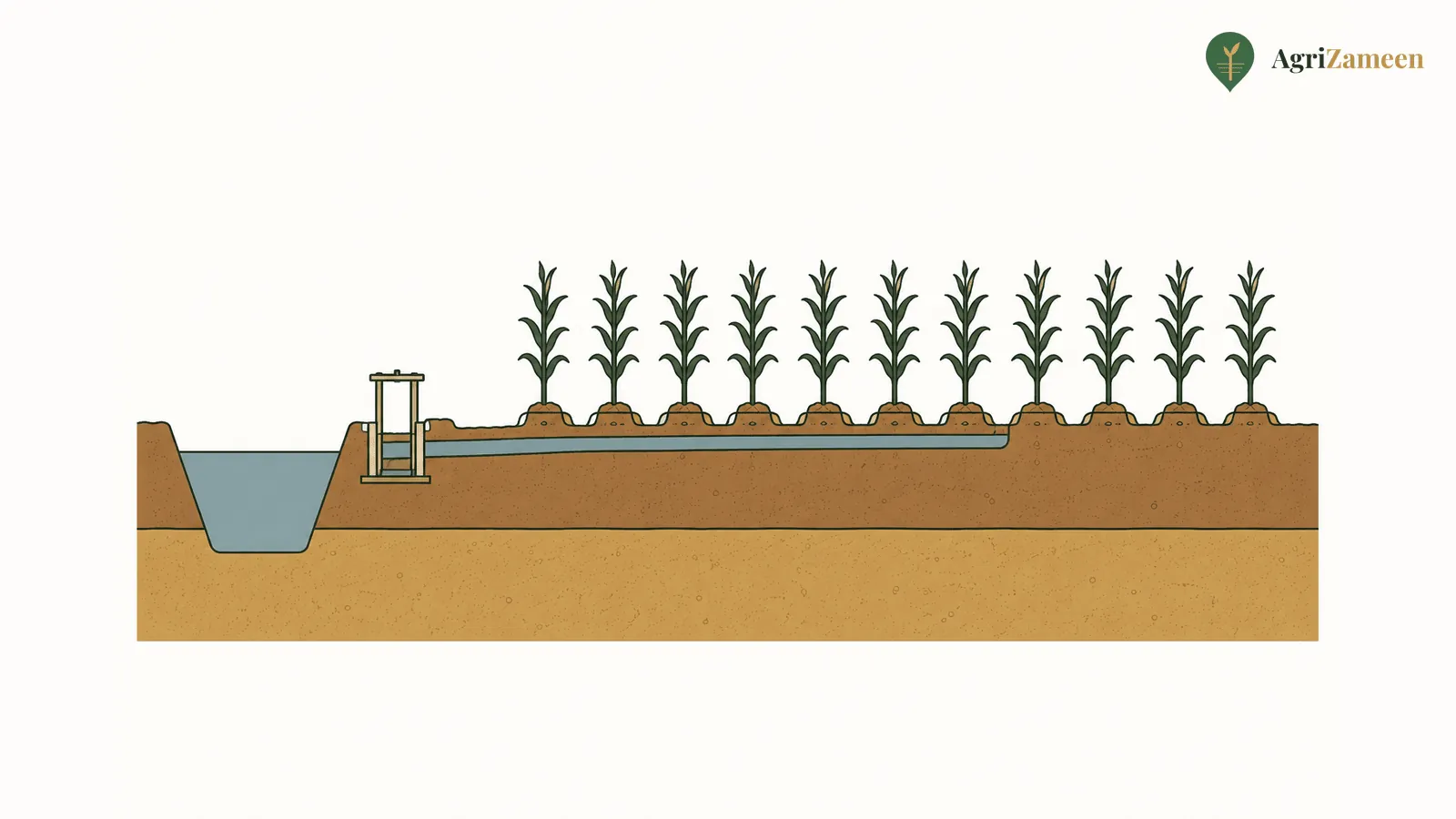
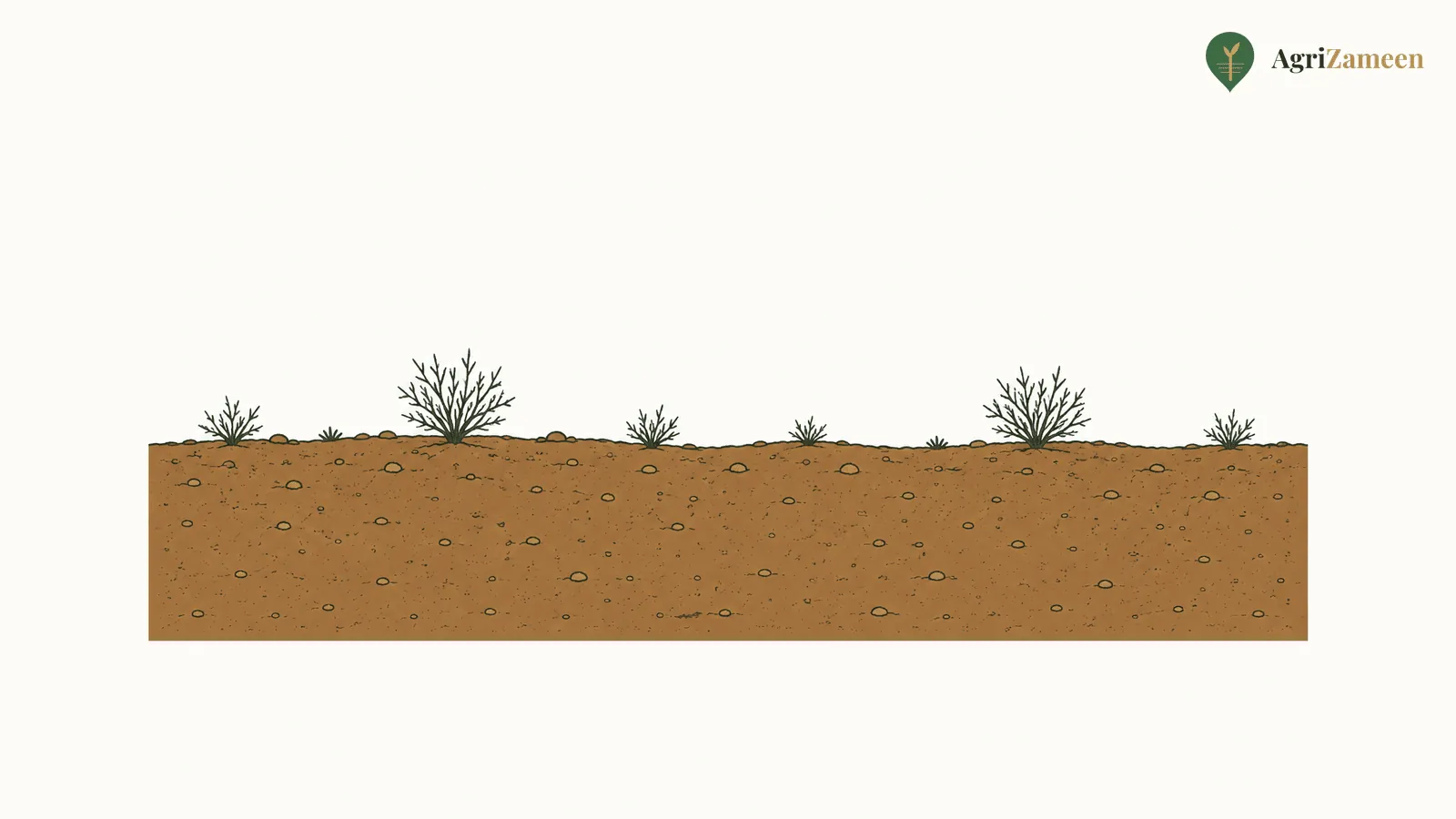
- Read the irrigation classes — चाही, नहरी, बारानी, तालाबी — and say what each implies about water.
- Explain the difference between बंजड़ कदीम and बंजड़ जदीद and why it matters to a buyer.
- Describe what the grade number after a class name is doing.
- Recognise सिवायचक and why it is not private land.
- Say why a class entry is a starting point for enquiry and never a substitute for a site visit.
Why classification exists at all
वर्गीकरण क्यों बना
The classification system in Rajasthan's revenue records was not designed to help buyers. It was designed to assess land revenue — the tax historically levied on agricultural land. A field that could be irrigated from a well produced more, so it was assessed higher than a field dependent on rainfall. That single purpose shaped the whole vocabulary you will find in a jamabandi.
The useful consequence for you is that the class column is a compressed, official statement about the land's water and productive status, recorded by someone who visited the area. It is one of the fastest signals available on a parcel you have not yet seen.
The irrigation classes
सिंचाई के आधार पर किस्में
| Class | Hindi | Source of water | What it signals |
|---|---|---|---|
| Chahi | चाही | Well | Irrigated from a well on or serving the land. Historically the highest-assessed class. Implies groundwater was reachable when the entry was made. |
| Nehri | नहरी | Canal | Served by a canal system. Depends entirely on the canal actually functioning and on the release schedule. |
| Chahi-Nehri | चाही-नहरी | Both | Well and canal. The most secure water position on paper. |
| Talabi | तालाबी | Tank / pond | Irrigated from a tank or pond. Seasonal and dependent on the tank's condition. |
| Barani | बारानी | Rain only | Rain-fed. The most common class across much of Rajasthan's dry belt. One crop a year in a normal monsoon. |
Uncultivated land: बंजड़
बंजड़ ज़मीन के दो रूप
Banjar means land not currently under cultivation. The records distinguish two kinds, and the distinction carries real weight.
बंजड़ जदीद — new fallow
Land that has fallen out of cultivation relatively recently. It is culturable — it went out of use for a reason that may be temporary, such as a failed water source, a family dispute, migration, or simply neglect. Banjar jadeed can often be brought back into production.
बंजड़ कदीम — old fallow
Land that has been uncultivated for a long period. It may be genuinely unculturable — thin soil, rock, salt-affected ground, badly drained. It may also simply be land nobody bothered with. Banjar kadeem parcels are cheap for a reason, and that reason needs identifying before purchase, not after.
For a buyer the practical question is the same for both: why did cultivation stop, and has anything changed? A banjar parcel that stopped being farmed because a shared well was partitioned away is a different proposition from one that stopped because the topsoil is 15 cm deep over caliche.
The grade number after the class
किस्म के आगे का नंबर
You will frequently see entries written as बारानी 1, बारानी 2, बारानी 3 or the equivalent for चाही. The number is a quality grade within the class, used in assessing revenue — lower numbers generally indicating better land within that class. This is why two barani fields side by side can carry different assessments.
Two cautions. First, the grading was made for revenue assessment, not for market valuation, and the two do not track each other neatly. Second, local practice in how grades were applied varies, so a बारानी 2 in one tehsil is not automatically comparable to a बारानी 2 in another. Treat the grade as a relative signal within a village, not an absolute score across the state. Confirm what the grades mean locally with the Patwari for that halka.
सिवायचक — the entry that is not private land
सिवायचक — यह निजी ज़मीन नहीं है
Siwai chak is land outside the allotted khatedari holdings — unallotted land recorded as being at the State's disposal. It is not private property, it is not for sale by any individual, and no amount of occupation converts it. You will nonetheless be offered it, sometimes sincerely by people who have farmed it for years and genuinely believe it is theirs.
Alongside siwai chak sit चारागाह (grazing land) and various गैर मुमकिन (unculturable) entries. These are the subject of Lesson 3 and are the most common single cause of a total loss on an agricultural land purchase in Rajasthan.
How to use the class column
इस कॉलम का इस्तेमाल कैसे करें
Used correctly, the class entry does three jobs early in your assessment:
- It filters. If you are looking for irrigable land, a page of बारानी 3 entries tells you to move on without a site visit.
- It generates questions. चाही on a parcel with no visible well is a question. बंजड़ जदीद on land surrounded by cultivated fields is a question. Good questions early save wasted trips.
- It explains price. When a seller's price looks low for the area, the class column usually contains the answer. When it looks high, the class column tells you whether the premium is justified.
What it does not do is replace standing on the land. The record is a claim about the land made at some point in the past by an official. Your eyes, a soil test, and a conversation with the neighbouring farmers are the present tense.
Key terms
मुख्य शब्द
- Chahi · चाही
- Well-irrigated land.
- Nehri · नहरी
- Canal-irrigated land.
- Barani · बारानी
- Rain-fed land, dependent entirely on monsoon.
- Talabi · तालाबी
- Land irrigated from a tank or pond.
- Banjar jadeed · बंजड़ जदीद
- New fallow — culturable land recently out of cultivation.
- Banjar kadeem · बंजड़ कदीम
- Old fallow — long uncultivated, often but not always unculturable.
- Siwai chak · सिवायचक
- Unallotted land at the State's disposal. Not private property and not saleable by an individual.
- Halka · हल्का
- The cluster of villages forming one Patwari's jurisdiction.
Check yourself
आठ सवाल · 6 या ज़्यादा सही = पास
Q1What does बारानी mean in a jamabandi entry?
Q2The class column shows चाही but you find no functioning well on the parcel. What is the correct conclusion?
Q3What distinguishes बंजड़ जदीद from बंजड़ कदीम?
Q4What is the number in an entry like बारानी 2 doing?
Q5A seller offers you land recorded as सिवायचक that his family has farmed for thirty years. What are you being offered?
Q6Why was the classification system created in the first place?
Q7Near Sambhar and Nawa, what additional water problem should you check for beyond availability?
Q8What is the correct role of the class column in your assessment?
What you can do tomorrow
कल से क्या करें
- Open any jamabandi you can access and locate the class column. Write down every distinct class you find on that page.
- Pick one parcel classified चाही and one classified बारानी in the same village and find out what each is currently selling for.
- Ask a farmer in your area what the local grading practice is — what makes a field बारानी 1 rather than बारानी 3 in that tehsil.
- If you know a banjar parcel, find out why cultivation stopped. That single question is the whole lesson.
Progress is saved in this browser only. Scoring 6 or more on the quiz marks the lesson complete automatically.
Apply this to a real parcel
AgriZameen lists agricultural land in the Phulera – Sambhar – Naraina – Rupangarh corridor, with the documents we have seen on each parcel. Reading a lesson is preparation; a record in your hand is the work.