🌾Need of the hour
Finite ground meeting a growing country
Land is the one asset they are not making more of. As cities spread outward, expressways and industrial corridors consume farmland, and the population keeps rising, well-held agricultural land near growth becomes a timely, tangible holding. Food security and a growing population mean cultivable land keeps its underlying purpose — feeding people — even as its location value shifts. In a world of paper assets, ground you can stand on has a certain permanence.
📊Higher demand
Infrastructure, population and limited supply
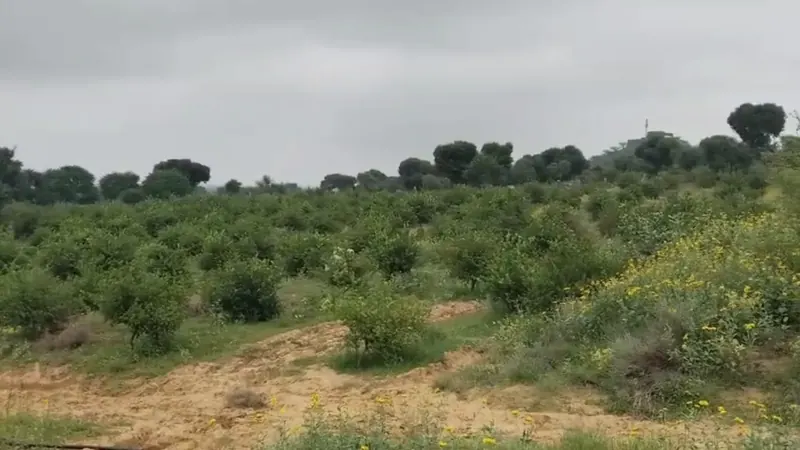
Demand for well-located agricultural land is driven by forces that compound over time: new highways and expressways opening previously remote belts, freight and industrial corridors creating logistics and employment nodes, urban expansion pushing buyers toward the periphery, and a simple, hard limit on supply. In our own focus belt west of Jaipur — Phulera, Sambhar, Naraina and the Rupangarh corridor — the Western Dedicated Freight Corridor, the Delhi–Mumbai Expressway network and Amritsar–Jamnagar all pass close by. You can see the corridors on our India maps and track the specifics on our development-news tracker.
💰Tax efficiency verify with a CA
Genuine agricultural income and rural land, treated favourably
India's tax law treats genuine agriculture gently — but the details matter, and this is not tax advice:
- Agricultural income is exempt from income tax under Section 10(1) — income from cultivation and rent from farmland, provided the land is in India and genuinely used for agriculture. Note it can still be counted for rate purposes on your other income through "partial integration."
- Rural agricultural land is not a "capital asset" under Section 2(14) — so gains on its sale are generally not taxed as capital gains. "Rural" has a specific legal definition based on distance from municipal limits and population.
- Urban agricultural land is taxable on sale as capital gains, but reliefs exist — e.g. Section 54B if you reinvest in agricultural land within the allowed window.
- Not everything qualifies: farmstay, event-venue and hospitality receipts are treated as business income, not exempt agricultural income.
Rules and thresholds change with each Budget and depend entirely on your situation — always confirm with a qualified chartered accountant before relying on any of this. See our stamp-duty guide for purchase-side costs.
☀️Regular income schemes
Beyond the crop — new ways land can earn
Agricultural land is no longer a single-income asset. Depending on the parcel, its water, and its location, owners are increasingly stacking income streams:
- Crop lease / batai (share-cropping): the classic — rent the land to a cultivator for a fixed sum or a share of the harvest while you hold the asset.
- Solar — PM-KUSUM Component A: under the MNRE scheme, owners of barren or fallow land near a power sub-station can lease it to a solar developer or self-install a small plant and sell power to the DISCOM under a long, 25-year Power Purchase Agreement. Agrivoltaic (stilt-mounted) setups can even keep cultivation going underneath. Eligibility hinges on proximity to a substation, clear title and state windows — and the illustrative income figures quoted online vary widely, so treat them as indicative, not promised.
- Carbon credits: India's Indian Carbon Market now includes agriculture, and Budget 2026-27 backed carbon capture heavily. Regenerative practices — no residue-burning, composting, tree planting, drip irrigation — can generate saleable credits. Realistically, small holdings must join through an aggregator or FPO, verification cycles mean the first payment can be 18–36 months away, and the market is still maturing — a genuine emerging stream, not quick money.
- Agroforestry & plantation: timber, fruit and boundary trees add a long-horizon yield alongside crops — well-suited to the semi-arid belt when species match the water.
- Contract farming & FPOs: tie-ups with buyers or farmer-producer organisations can stabilise price and market access.
We help owners set several of these up — see end-to-end development (solar, water, plantation) and the belt's agriculture essentials.
📈Better returns potential not guaranteed
Historically rewarding near real infrastructure — with honesty about risk
Agricultural land in belts that later received real infrastructure has, in many cases, appreciated meaningfully over long holding periods. Buying earlier in an infrastructure story — before a corridor is complete — is where much of that potential has historically sat. But this must be said plainly: land is market-linked, illiquid, and past appreciation is history, not a guarantee. Returns depend on the specific parcel, timing, title, water and whether the infrastructure actually materialises. We are not SEBI-registered advisers; this is information, and the decision — and its risk — is yours.
🛡️Inflation hedge & tangible asset
Ground you can stand on
As a finite, physical asset, agricultural land has historically tended to hold real value through inflationary cycles better than cash. It cannot be printed, it does not vanish in a market crash the way paper holdings can, and it carries an intrinsic use-value — it can always grow something. That tangibility is a large part of why families across India have trusted land for generations.
🌳Grow with the land
A plot today, a working asset tomorrow
Unlike a fixed deposit, land is something you can improve. Over time you can secure it with a boundary wall, source and store water, build a farmhouse within the rules, plant an orchard, or add solar — each step raising both its usefulness and, often, its worth. The land grows with your family's plans. Our services cover this whole lifecycle, from the first site visit to the day the orchard takes root.
🏛️Generational wealth
The ultimate legacy asset
Land is the classic asset to pass on — it endures without daily effort, it carries deep cultural meaning in India, and inherited agricultural land enjoys its own favourable treatment. Held with clean, mutated records, it can move down a family for generations, quietly anchoring their security. Keeping the नामांतरण (mutation) current is what keeps that legacy clean — see our mutation guide.
🏦Government support
Schemes that back the landowner-farmer
Owning cultivated agricultural land with clean records can open the door to a range of government support: the Kisan Credit Card for low-cost crop finance, PM-KISAN income support for eligible farmers, free Soil Health Card testing, micro-irrigation and farm-pond subsidy schemes, and the solar support above. Eligibility rules vary and must be checked on the official portals — but the direction of policy has consistently favoured the working landowner.
🌱Accessible entry & diversification
A different asset class, on a real-world budget
Compared with urban real estate, agricultural land in growth belts can offer a lower per-unit entry point, letting buyers take a position on a real-world budget. For an investor, it diversifies a portfolio away from equities and financial products into a tangible, low-correlation asset. For a family, it can be the first piece of land they ever own — and, for many, a source of quiet pride and a place to return to.
The risks — weighed honestly
A platform that only lists benefits is selling, not informing. Agricultural land carries real risks you must weigh:
- Illiquidity: land can take months to sell at a fair price — it is not money you can withdraw quickly.
- Title & records: unclear ownership, mortgages (रहननामा), or disputes are the biggest danger — verification before any payment is non-negotiable.
- Water: in a hard-water, over-exploited belt, a parcel's real value often depends on the bore — test it, don't assume it.
- Market cycles: prices can stagnate for years; infrastructure timelines slip; "returns" are never guaranteed.
- Scheme conditions: solar, carbon and subsidy incomes all carry eligibility rules and delays — real, but not automatic.
- Land-use limits: farmhouse and non-agricultural use need §90A/90B conversion; ceiling laws cap large holdings.
This is exactly why AgriZameen leads with records, verification and honest information — so you go in with open eyes.
Ready to look at real, verified land?
Browse verified parcels in the belt, or talk to us about what fits your budget and goals — no pressure, records first.
Browse verified listings Talk to us on WhatsAppCommon questions
Is income from agricultural land really tax-free?
Genuine agricultural income is exempt under Section 10(1), and gains on rural agricultural land are generally outside capital gains — but conditions apply, urban land is treated differently, and agricultural income can affect the rate on your other income. Always confirm with a chartered accountant.
Can I really earn from solar or carbon credits on my land?
Yes, both are real. Solar leasing under PM-KUSUM Component A needs barren/fallow land near a substation with clear title; carbon credits usually require joining an aggregator or FPO and take 18–36 months to first payment. Neither is guaranteed or instant.
Are the returns guaranteed?
No. Land is market-linked and illiquid, and past appreciation is not a promise of future returns. Anyone guaranteeing returns on land should be treated with caution.
What is the single biggest risk?
Unclear title or records. It is why we verify every parcel against official portals before any money moves — see our fraud red-flags guide.
Important: AgriZameen is an independent private platform providing information and services — not a government body, not a SEBI-registered investment adviser, and not a substitute for professional tax or legal advice. Nothing on this page is a recommendation to buy, or a promise of returns; agricultural land is market-linked, illiquid and carries risk. Tax treatment (including Sections 10(1), 2(14) and 54B), and scheme eligibility (PM-KUSUM, the Indian Carbon Market, KCC, PM-KISAN) depend on your circumstances and change over time — verify on official portals and with a qualified professional before acting. Reviewed July 2026.
The case against — read this before the case for
Any page arguing for an asset class should be able to argue against it. Land is illiquid: selling can take months and the buyer pool for a mid-size agricultural parcel in a specific belt is thin. It is lumpy — you cannot sell a quarter of a plot to meet an emergency the way you can redeem part of a fund. It produces no yield by default; an unfarmed, unleased parcel costs you money in fencing, watchman and upkeep while producing nothing. It carries title risk that no amount of diligence reduces to zero. It is concentrated — one parcel, one location, one set of local decisions. And returns are path-dependent on infrastructure: corridors get rerouted, alignments shift, notified plans get revised, and the "coming soon" project can arrive a decade late or not at all. If any of those would keep you awake, agricultural land is not the right holding for you, and we would rather say so now.
Who it actually suits
Long-horizon holders
People who can leave capital untouched for seven to fifteen years and will not be forced into a distressed sale by an unrelated event.
Diversifiers
Those adding a non-correlated, non-market-quoted asset alongside equity, debt and gold — not those replacing them.
Families with a use in mind
A farmhouse, an orchard, a retirement plan, a plantation — a use case that gives the land a job while it is held.
Operators
Buyers who will farm, lease, or put the parcel to work on solar, storage or horticulture rather than leaving it idle.
How land value actually moves
Belt values do not rise smoothly. In practice they move in steps tied to visible, completed events: a road actually opening rather than being announced; a freight corridor running trains; a plan notification that changes the permitted use; an anchor employer breaking ground. Between those steps, values often sit flat for years — which is exactly the period in which impatient buyers sell to patient ones. The mistake we see most often is paying an announcement premium: the price already reflects a project that has not been built, so the buyer funds the upside before it exists. Our own approach is to look at what has been delivered in a belt and treat everything else as optionality with no price attached.
Six questions to answer before you buy
- Can I hold this for ten years without needing the money? If not, stop here.
- What does the record say — not the seller? Fresh jamabandi, bhu-naksha, encumbrance and mutation trail.
- Is there a recorded approach road? A landlocked parcel is a different asset from the one in the photograph.
- What is the notified land use? Check the master plan before anyone mentions conversion.
- What will it cost me to hold? Fencing, watchman, upkeep, and the opportunity cost of idle capital.
- What is my exit? Who is the realistic buyer in ten years, and why would they want this specific parcel?
If you can answer all six, you are ahead of most first-time buyers. Work through the free due-diligence checklist, learn to read the papers yourself on Read Land Records, and when you are ready, the Buy Land desk is free to ask. None of this is investment advice — land is market-linked, no return is assured, and you should take your own legal and tax advice before committing.