Area & administrative figures: Census of India / Government of Punjab. Punjab is among India's smaller states by area but a giant in foodgrain output.
Punjab at a glance
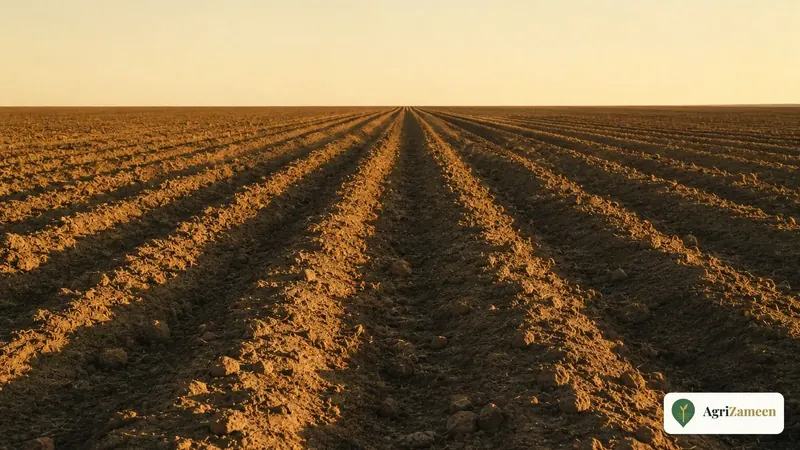
Punjab covers about 50,362 square kilometres — a comparatively small state, but one of the most agriculturally intensive on earth. Its name means 'land of five rivers,' and its flat, canal- and tubewell-irrigated alluvial plain, combined with Green Revolution technology, makes it the backbone of India's public foodgrain procurement.
Major highways
The historic Grand Trunk Road (NH-44) runs the length of Punjab, linking Delhi to Amritsar and the Wagah border.
National Highway routes per NHAI / public records. Highway networks are extended and renumbered periodically — confirm current alignments.
Principal crops
Punjab's irrigated plains run an intensive wheat–rice rotation that feeds much of India.
The heart of Punjab's Rabi season and a mainstay of India's foodgrain pool.
Dominant Kharif crop — Punjab is a leading rice contributor to central procurement.
Important cereal, grown as an alternative in the crop cycle.
Key cash crop in the south-western Malwa belt (Bathinda, Mansa).
Grown in the central and northern districts.
Premium aromatic rice, a high-value export crop.
Land records — official sources
🏛️ AgriZameen is independent — not a government body. The links below open the official Punjab government land-records portal. Always verify a parcel's records and land-use there and at the local revenue office before any transaction.
🏛️ Punjab Land Records (Fard)🗺️ PLRS portal📚 All state portals in our Records Hub 🔎 Verify a plot in Punjab — deed, encumbrance, RERA, master planPunjab land units
Punjab works in marla, kanal, bigha, biswa alongside acre and hectare. The table below gives the values used by the AgriZameen Land Converter, so a figure you read here and a figure the converter returns will always agree.
| Unit · इकाई | Square feet | Square metre | In acres |
|---|---|---|---|
| Marla मरला 1/20 kanal | 272.25 | 25.29 | 0.00625 |
| Kanal कनाल 20 marla · 8 kanal = 1 acre | 5,445 | 505.86 | 0.125 |
| Killa किल्ला Locally equal to one acre | 43,560 | 4,047 | 1 |
| Bigha * बीघा Kaccha bigha · approximate, varies locally | 9,070 | 842.63 | 0.2082 |
| Biswa * बिस्वा 1/20 bigha | 453.5 | 42.13 | 0.01041 |
| Acre एकड़ | 43,560 | 4,047 | 1 |
| Hectare हेक्टेयर | 107,639 | 10,000 | 2.471 |
Convert it yourself:
Unit values reviewed July 2026, sourced from the AgriZameen Land Converter factor table. Unit definitions are customary and can differ village to village; nothing here is a legal or valuation opinion. Always verify against the record of rights.
🌾 Looking for land here?
AgriZameen's live listings of agricultural land for sale are in Rajasthan's Jaipur–Ajmer corridor for now — see agricultural land for sale. If you want to buy agricultural land in Punjab — to farm, to build where the zoning allows it, or to invest in land — check who may buy here first (the rules are above), then tell us what you are looking for: we are expanding, and we will point you to the right official checks meanwhile. AgriZameen does not promise a price or a return.
पंजाब में कृषि भूमि ख़रीदनी है? पहले ऊपर के नियमों में देखें कि यहाँ कौन ज़मीन ख़रीद सकता है, फिर काग़ज़ ख़ुद जाँचें। AgriZameen किसी दाम या मुनाफ़े का वादा नहीं करता।
Zone map — growth belts, street & satellite
Gold circles mark the growth zones. Tap a zone for details, and toggle satellite to see the actual ground.
📍 Zones and markers are indicative growth areas, not official boundaries. Verify a parcel's exact location on the official Bhu-Naksha / cadastral map before any transaction.
Soil types, crops & cities
What the land is made of, what grows on it, and where the action is — filter the cities by what you are looking for.
Indicative agronomic and regional summary — soil, crops and suitability vary parcel by parcel. Test the specific plot and confirm with the local agriculture department before planning.
Buying land in Punjab — the process step by step
The statutory spine is the same across India — the Transfer of Property Act 1882 and the Registration Act 1908 — but the state layer differs, and that is where the money and the delays sit: what the record is called, which valuation the duty is charged on, and which office does your mutation. Here is the Punjab version.
Generally open to buyers; ceiling under the Punjab Land Reforms Act applies. Confirm local rules. Settle this before you pay a single rupee — an ineligible buyer does not get a defective title, they get no title.
Get the current record from PLRS Jamabandi — records and read four things: the recorded holder's name, the land classification, the area, and every co-sharer if the holding is joint. An online copy is a screening layer, not a title opinion — confirm the live position at the Patwari/Tehsil (Fard Kendra) as well.
Work backwards through prior deeds, then take an encumbrance certificate covering at least the last 13 years (30 is better on a large parcel). You are looking for mortgages, court attachments, pending mutations, unpaid dues and inheritance claims. This is the step where deals go wrong quietly.
This is the government's floor value for the plot. Stamp duty is charged on the higher of your agreed price and this figure — so a price written below that figure does not reduce your duty — it only invites scrutiny. Check what it is called and where the state publishes it on our government land rate page, then confirm the figure at the Sub-Registrar's office before you negotiate.
Put the price, payment schedule, handover date, boundary description and — critically — what happens if a title defect surfaces, into a written agreement. Pay by traceable bank transfer, never cash, and keep the receipts with the file.
Duty is paid before execution, generally by e-stamp or treasury challan. On a ₹50,00,000 transaction in Punjab that is roughly ₹3,50,000 in stamp duty for a male buyer, ₹2,50,000 for a female buyer, plus about ₹50,000 in registration fees — see the worked example below.
Buyer and seller attend in person with two witnesses, photo ID and PAN. Expect photographs and biometric capture. Under the Registration Act 1908 an unregistered sale of immovable property transfers nothing — the registered deed is the transaction.
Registration records the deed; mutation puts your name on the revenue record. Apply at the Patwari/Tehsil (Fard Kendra) with the registered deed and prior record. Until the Fard / Jamabandi shows your name, you will struggle to sell, mortgage or claim any scheme benefit on that land.
Collect the certified copy of the registered deed, confirm the updated record reflects your name and correct area, update land-revenue and tax records, and store the whole file — deed, record, encumbrance certificate, receipts, maps — together. The next buyer will ask for exactly this bundle.
What the paperwork costs — a worked example
On a ₹50,00,000 agricultural-land purchase in Punjab, charged on the higher of the price or the Collector rate:
| Head | Amount |
|---|---|
| Stamp duty — male buyer (7%) | ₹3,50,000 |
| Stamp duty — female buyer (5%) | ₹2,50,000 |
| Registration fee (1%) | ₹50,000 |
| Indicative total — male / female | ₹4,00,000 / ₹3,00,000 |
Includes social-infrastructure cess. Indicative only — surcharges, cesses, caps and slab rules vary, and rates are revised periodically. Budget separately for mutation fees, legal fees, and any conversion cost. Run your own figure on our 28-state stamp-duty calculator, then confirm with the Sub-Registrar.
Documents to have ready
- Photo ID and PAN for every buyer and seller (plus the two witnesses' ID).
- The current Fard / Jamabandi and the prior title deeds forming the chain.
- Encumbrance certificate for the search period, and the latest land-revenue / tax receipts.
- Survey map or cadastral extract matching the plot on the ground.
- Identity or status proof where the law requires it — agriculturist, tribal, domicile or category certificates as applicable in your case.
- Consent or party status for every co-sharer if the holding is joint, and legal-heir documents where the seller inherited.
If you plan non-agricultural use
Change of Land Use (CLU) permission is required for non-agri use. Do this arithmetic before you buy, not after: conversion carries its own fee, its own approval risk and its own timeline, and a refusal leaves you holding agricultural land you intended to build on. Zoning and master-plan status matter as much as the revenue entry.
How long it takes
Registration itself is usually a same-day appointment once the duty is paid and the deed is ready. Mutation is the slower half — it runs from a few weeks to several months depending on the office, whether objections are raised, and whether the holding is joint or inherited. Many states publish a service-guarantee timeline for mutation; ask for it in writing at the counter and keep the acknowledgement receipt with a date on it. Treat any promise of same-week mutation as a claim to verify, not a fact.
Changing land use in Punjab — conversion
Agricultural land in Punjab cannot be used for a house, shop, warehouse or factory simply because you own it. The land-use entry has to be changed first, and that is a separate approval from the sale. Change of Land Use (CLU) permission is required for non-agri use.पंजाब में कृषि भूमि का उपयोग बदलने के लिए अलग स्वीकृति ज़रूरी है।
Where the parcel sits changes who decides
This is the part buyers most often get wrong. Two parcels with identical revenue entries can follow completely different approval routes depending on what else the land falls inside.
| Where the parcel sits | Who typically decides | What else binds you |
|---|---|---|
| Pure rural revenue area outside any municipal or development-authority limit | The district revenue authority, by the route named above | Revenue law and any tenancy or category bar |
| Inside municipal or development-authority limits town, city, or notified planning area | Revenue conversion and the town-planning or development authority | The master plan and the zone the parcel is marked in — a revenue approval cannot override a zoning designation |
| Inside a notified industrial area | The industrial development agency, under its own allotment rules | Agency allotment terms, which usually replace ordinary conversion entirely |
| Near a highway, canal, water body or protected land | As above, plus the relevant setback or clearance authority | Setbacks and no-objection requirements that can make a parcel unbuildable even after conversion |
What conversion is usually sought for
Most states recognise a set of target uses — commonly residential, commercial, industrial and institutional — each priced and assessed differently, and each judged against the zoning that applies at the parcel. Applying for the wrong target use is a common cause of delay. Confirm the exact categories, the current fee basis and the applicable form for your tehsil before you file.
Papers usually needed
Before you rely on any of this
- SC/ST and tribal-held land. Separate statutory bars can apply regardless of use. See our SC/ST land rules guide.
- Tenancy and ceiling law. A tenant's rights and any holding ceiling survive a change of use. Conversion does not clean up a defective title.
🏛️ AgriZameen is independent — not a government body, and this is not legal advice. Conversion rules, fees and forms are revised by state governments and can change without notice. Confirm the current position at the official portal and the local revenue office, and take advice from a licensed advocate before you commit money.
🏛️ Official Punjab portal📚 All state portals in our Records HubConversion mechanism reviewed July 2026. This page describes the shape of the process — the authority, the routes and the papers — and deliberately carries no fees, no timelines and no statutory section numbers beyond those already stated above, because those figures change and a stale number here would be worse than none. Nothing on this page is legal, tax or valuation advice.
Water and groundwater in Punjab
For agricultural land, water is usually the difference between a parcel that works and a parcel that does not — and it is the factor buyers check last, if at all. India's groundwater is assessed block by block, and the category assigned to your block governs whether you can legally sink a new borewell at all.पंजाब में ज़मीन खरीदने से पहले ब्लॉक की भूजल श्रेणी जाँचें।
The five categories, and what they actually mean
The Central Ground Water Board and the state agencies jointly assess each block, mandal or taluka. The measure is the stage of extraction — annual groundwater extraction as a share of the annual extractable resource.
| Category | Stage of extraction | What it means for a buyer |
|---|---|---|
| Safe | Below 70% | New abstraction is ordinarily possible, subject to normal permissions |
| Semi-critical | 70–90% | Under watch; expect closer scrutiny and possible conditions |
| Critical | 90–100% | Restrictions are likely — assume a new connection is not guaranteed |
| Over-exploited | Above 100% | Extraction exceeds recharge. New abstraction is commonly restricted or refused |
| Saline | — | Groundwater is brackish or saline. Water may be present and still be unusable for most crops |
Category definitions and thresholds per the CGWB / state Dynamic Ground Water Resource Assessment methodology. Nationally, the 2024 assessment covered 6,746 assessment units: 4,951 safe, 711 semi-critical, 206 critical, 751 over-exploited and 127 saline, with an average stage of extraction of 60.47%. Over-exploited units are concentrated in the north-west (Punjab, Haryana, Delhi, western Uttar Pradesh), the west (Rajasthan, Gujarat) and parts of the south (Karnataka, Tamil Nadu, Telangana, Andhra Pradesh). Assessments are revised periodically and a block's category can change — verify the current position.
Three things a working borewell does not tell you
- That it is permitted. An existing borewell is not proof that a new one, or a deeper one, will be allowed. In restricted blocks that permission is the binding constraint, not the drilling cost.
- That it will still yield in five years. In an over-exploited block the water table is falling by definition. Ask what depth the borewell was sunk to, what depth it draws from now, and when it was last deepened.
- That the water is usable. Yield and quality are separate questions. Salinity and sodicity can make adequate water useless for the crop you have in mind — in salt-affected belts this is the first test to run, not the last.
What to check before you pay anything
💧 AgriZameen is independent — not a government body, and this is not legal, agronomic or valuation advice. Block categories are published by the Central Ground Water Board with the state groundwater agencies and are revised periodically. Confirm the current category for your block from the official source, and get an independent water test before you rely on any seller's account of a borewell.
🏛️ CGWB — Ground Water Resource Assessment🧪 Soil & water testing guidance📚 All state portals in our Records HubWater framework reviewed July 2026. This section carries the assessment method and the national picture deliberately, and no per-block or per-district figure, because a block's category changes with each assessment and a stale category here could cost a buyer real money. Per-state assessment figures are being added state by state from the published CGWB state reports.
The government rate that sets your stamp duty floor
Most states publish an official minimum valuation for land, area by area. Stamp duty and registration fees are charged on the higher of your actual transaction value and that official rate — so it acts as a floor under your tax bill, whatever you actually pay. In Punjab this rate is commonly called the collector rate. It is the government's minimum value for land in a given area — not an estimate of what the land is worth.पंजाब में स्टाम्प ड्यूटी सरकारी न्यूनतम दर या वास्तविक कीमत — जो अधिक हो — पर लगती है।
What it is, and what it is not
| It is | It is not |
|---|---|
| A floor for stamp duty — duty is charged on the higher of the rate and your consideration | A valuation of your parcel. It carries no view on access, water, soil or shape |
| Set area by area, revised periodically by the state | A live market price. It commonly lags the market, sometimes by years, in both directions |
| A negotiating reference both sides can look up | A ceiling or a fair price. Land routinely transacts above it, and sometimes below |
| Usually differentiated by land use and location — agricultural, residential, commercial; along a highway versus interior | Uniform across a village. Two khasras in one village can carry very different rates |
Why this matters before you agree a price
- Your duty is predictable — look it up first. If the official rate exceeds what you are paying, you are taxed on the higher figure. Find the rate for that specific area before you settle a number, not after.
- A rate far below asking is a question, not a bargain. It can mean the market has moved, or that the parcel's use classification is not what you assume. Both are worth understanding.
- Conversion changes the rate that applies. Agricultural and non-agricultural land are rated differently. If you plan to convert, the rate that governs your duty afterwards is not the one you bought under.
- Undervaluing the consideration is not a saving. Registering below the official rate invites a valuation reference, and the difference is recoverable with consequences. The floor exists precisely to stop this.
🏛️ AgriZameen is independent — not a government body, and this is not legal, tax or valuation advice. Official rates are set and revised by state authorities and change periodically. We publish no rate figures for any district. Get the current rate for your specific area from the state registration department or the sub-registrar's office, and confirm your duty with them before you commit.
📄 Stamp duty & registration guide📚 All state portals in our Records HubMechanism reviewed July 2026. This section deliberately carries no rupee figures and no per-district rates. Official valuations are revised area by area on their own cycles, and a stale rate published here would mislead someone into budgeting the wrong duty on a real purchase. Always read the rate from the official source on the day.
Electricity for farmland in Punjab
An agricultural connection is attached to the land and the consumer number — not to the sale deed. It does not pass to you automatically when you buy, and unpaid dues on it do not disappear at registration. For irrigated farmland this is often the second most valuable thing attached to a parcel after the water itself.पंजाब में बिजली कनेक्शन बिक्री-पत्र के साथ अपने आप हस्तांतरित नहीं होता।
What to establish before you pay
| What to ask for | Why it decides the price you should pay |
|---|---|
| The last electricity bill for the parcel | Names the supplying company, the consumer number, the connection category and the sanctioned load. Everything else follows from this one document |
| Whose name the connection is in | Transfer of a connection is a separate application to the utility, with its own documents and its own timeline. An inherited connection in a deceased holder's name is a known delay |
| Outstanding arrears | Dues attach to the connection and the premises. Ask for a no-dues position, in writing, before completion — not after |
| Sanctioned load and pump capacity | Determines what you can actually run. Raising sanctioned load is an application, not a switch, and can be refused or queued |
| Distance to the nearest line and transformer capacity | If there is no connection, the cost of extending the line and any transformer work commonly falls on the applicant. A parcel several hundred metres from the nearest line carries a real, quotable cost |
| Whether supply is on an agricultural feeder | Agricultural feeders are often supplied in scheduled blocks rather than continuously. Ask how many hours, and when — it governs what irrigation schedule is actually possible |
Find out which company actually supplies the parcel
Punjab's distribution utilities serve defined territories, and we deliberately do not name one here — utility names and jurisdictions change with restructuring and district reorganisation, and sending you to the wrong office wastes a trip. The fastest confirmation is any existing electricity bill for the parcel, which carries the supplying company's name, the consumer number, the sanctioned load and the connection category. If there is no bill, the local distribution office for that village can confirm the territory.
The subsidised category, and how you lose it
- Agricultural supply is a separate, subsidised tariff category in every state, priced well below commercial and industrial supply, because it exists to support cultivation.
- It is tied to agricultural use. Running non-agricultural load on an agricultural connection is misuse, and it carries recovery and penalty consequences. This matters if you intend a farmhouse, a cold store, a warehouse or any commercial activity.
- Converting the land use changes the category. If you convert the parcel to non-agricultural use, the connection has to be recategorised, and the tariff you budgeted as a farm buyer stops applying. Do that arithmetic alongside the conversion arithmetic, not after it.
- Solar pumping is a separate route. Central and state schemes support solar irrigation pumps and feeder solarisation, with their own eligibility and their own application process. See our solar land guidance.
Who sets the rate
Retail tariffs are not set by the utility. They are determined by the State Electricity Regulatory Commission under the Electricity Act, 2003, through a tariff order issued on its own cycle, following the utility's annual revenue requirement petition and a public hearing. Categories, slabs, fixed charges, fuel surcharges and any state subsidy all sit inside that order and all change when it is revised.
⚡ AgriZameen is independent — not a government body, not a utility, and this is not legal, tariff or valuation advice. We publish no tariff figures, no per-unit rates and no connection charges, because those are reset by regulatory order and a stale number here would have someone budget a purchase wrongly. Read the current rate from the applicable tariff order or the utility's published schedule, and confirm arrears and transfer requirements with the local distribution office.
☀️ Solar & BESS land🧪 Soil & water testing📚 All state portals in our Records HubFramework reviewed July 2026. This section describes the structure — how a connection behaves as an asset attached to land, what to verify, who sets the rate — and deliberately carries no rates or charges. Tariff orders are revised periodically and per-unit figures published here would go stale between one order and the next.
Farmer support and subsidies in Punjab
Support for farmland comes from two directions: central schemes that run nationwide, and state schemes that differ from one state to the next. Both are keyed to the same thing — the land record.पंजाब में किसान सहायता — केंद्रीय और राज्य, दोनों भू-अभिलेख पर आधारित।
Central schemes, and what each needs from your land record: income support, crop insurance, Kisan Credit Card, soil health cards, micro-irrigation and solar pumping all run nationwide with their own official portals. We keep one canonical page for them rather than repeating it state by state — central farmer schemes and the land record they depend on.
Finding Punjab's own scheme portal
Punjab runs its own state schemes alongside the central ones, usually through the agriculture and horticulture departments and increasingly through a single-window portal. We deliberately do not name a portal here — state portals are renamed and consolidated, and a dead link sends you nowhere. The reliable routes are the state agriculture department, the local agriculture supervisor or extension officer, and the state portal directory in our Records Hub. For comparison, our fully mapped example is Rajasthan's scheme list.
🏛️ AgriZameen is independent — not a government body and not an intermediary. We do not file applications, charge any fee for scheme access, or act as an agent for any scheme. Applications are made directly on official portals, free of charge. Anyone offering to secure a subsidy for a fee is not operating the way these schemes work.
🇮🇳 Central farmer schemes📚 All state portals in our Records HubReviewed July 2026. No subsidy amounts, percentages or caps are published here — those are revised by guideline and by budget. Read the current figure on the official portal on the day you apply. Nothing here is legal, tax, financial or agronomic advice.
Frequently asked questions
How big is Punjab?
Punjab covers about 50,362 square kilometres — a relatively small state, but one of the most agriculturally productive, and its capital Chandigarh is a union territory shared with Haryana.
Why is Punjab called the Granary of India?
Because of its exceptionally high wheat and rice productivity and its large contribution to India's central foodgrain procurement, driven by intensive irrigation and Green Revolution technology.
How do I check land records in Punjab?
Use the official Punjab Land Records portal (Fard, jamabandi.punjab.gov.in) and PLRS — linked above and in our Records Hub — and confirm at the local revenue office.
What are killa, kanal and marla?
Punjab's land units: a killa equals one acre, a kanal is 1/8 acre, and 20 marla make one kanal. Use our Land Converter for exact conversions.
Can anyone buy farmland in Punjab?
Rules and any ceilings vary — confirm eligibility with a licensed advocate before committing. See our buyer FAQs for the general checklist.
Explore more
🗺️ All states · Rajasthan guide · 📖 Read land documents · 🔢 Bigha in Punjab · 📖 Glossary
State information is compiled from public and official sources for general awareness and is not legal or investment advice. Figures such as area and highway routes change with administrative revisions — verify current details on official portals. External government links open in a new tab; AgriZameen does not control those sites.
Land schemes in Punjabपंजाब — ज़मीन से जुड़ी सरकारी योजनाएँ
AgriZameen एक स्वतंत्र सूचना मंच है, किसी सरकारी विभाग से संबद्ध नहीं। योजना की राशि, पात्रता और समय-सीमा बदलती रहती है — आवेदन केवल आधिकारिक सरकारी पोर्टल पर करें।
AgriZameen is an independent information platform, not affiliated with any government department. Scheme amounts, eligibility and deadlines change — apply only on the official government portals linked above.
Land record portal: Punjab Land Records Society
Schemes recorded for Punjab
- Punjab Land Records Society
- Mera Ghar Mere Naam — verify on portal
What each one covers, eligibility and the official portal for each →
Central schemes apply here too — DILRMP, ULPIN/Bhu-Aadhaar, SVAMITVA, the Forest Rights Act and the Agriculture Infrastructure Fund. All of them, with portal links, are on our state-wise scheme hub.
AgriZameen एक स्वतंत्र सूचना मंच है, किसी सरकारी विभाग से संबद्ध नहीं। योजना की राशि, पात्रता और समय-सीमा बदलती रहती है — आवेदन केवल आधिकारिक सरकारी पोर्टल पर करें।
AgriZameen is an independent information platform, not affiliated with any government department. Scheme amounts, eligibility and deadlines change — apply only on the official government portals linked above.