Evacuation decides the site before the soil does
A solar or BESS project is only as good as its connection. Distance to a viable evacuation point, and whether capacity is available there, screens out more sites than any land characteristic. A parcel that looks ideal and sits far from a usable connection is not a solar site — it is farmland with a view.
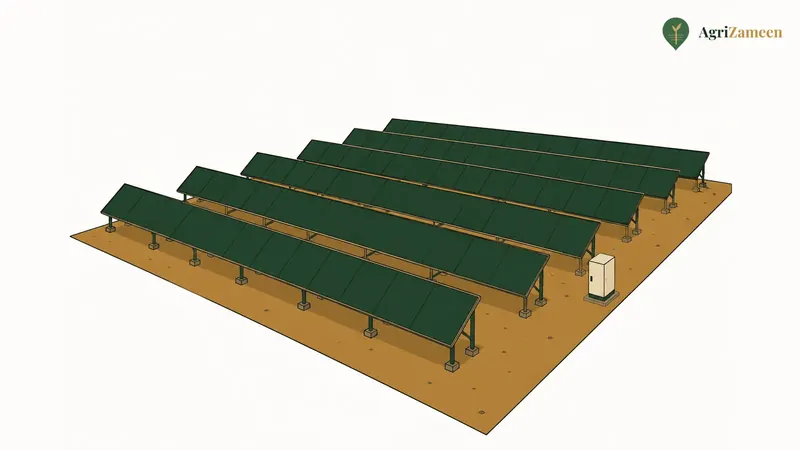
This is why a landowner cannot self-assess suitability from the ground. The question is a grid question.
What a developer actually screens for
- Evacuation. Distance and available capacity at the connection point.
- Contiguity. One block beats the same area in scattered khasras, every time. Fragmented holdings usually need aggregation before anyone will look.
- Approach. Construction traffic needs a real road, not a field track.
- Terrain and shading. Slope, water-logging, and anything that throws a shadow.
- Title and tenure. A clean chain and an owner who can actually grant a long lease — undivided family holdings and pending partitions are a common stopping point.
What a landowner should settle first
Before signing anything: tenure and renewal terms, escalation, who bears which taxes and charges, access across the rest of your holding, the restoration obligation at end of term and what secures it, and whether the developer may assign the lease onward. Every one of those is negotiable at the draft stage and none of them is negotiable afterwards. Have your own lawyer read it.
Longer treatment: solar lease on agricultural land in Rajasthan and leasing for solar and telecom in the Academy.
Where this belt sits
The corridor west of Jaipur — Phulera, Sambhar, Naraina, Rupangarh — carries the open, level, contiguous holdings that screen well on the land side. Whether any given parcel screens well on the grid side is a separate enquiry, and it is the one to make first. Our wider page: solar & BESS land.
An honest word. AgriZameen is an independent private platform — not a government body, and not affiliated with any land-records department. Everything below is a method for checking, not a valuation and not advice to buy. Verify every record on the official portal and at the Tehsil before any payment. हर रिकॉर्ड सरकारी पोर्टल और तहसील में खुद जाँचें।
Common questions
What makes land suitable for solar near Jaipur?
In practice the order is: a viable evacuation point, then contiguous area, then approach for construction traffic, then terrain and shading, then title. Sites fail on evacuation far more often than on soil.
Should I sell or lease my land for a solar project?
That depends on your own position and we are not the right party to decide it for you. A lease keeps the asset and gives a long income stream with restoration obligations at the end; a sale ends the relationship. What matters either way is that the terms are written before anything is signed. See solar leases on agricultural land.
What should a landowner settle before signing a solar lease?
Tenure and renewal, escalation, who pays which taxes and charges, access rights across the remaining holding, the restoration obligation and security at the end of term, and what happens if the developer assigns the lease to someone else. Take the draft to your own lawyer, not the developer’s.
Does leasing land for solar change its agricultural status?
Not automatically, and you should not assume it does or does not. Ask specifically what permission the project relies on for that khasra and get it in writing before signing.