In July 2026, Jaipur was named the sixth happiest city in the world — the only Indian city in the top ten. The news travelled fast, and within days it was being attached to property pitches. So this piece does two things: it states precisely what the ranking is, and it separates what it tells you about land around Jaipur from what it does not.
The short version: it is a genuine and well-earned recognition of what living in Jaipur feels like. It is not a land-price signal, and anyone selling you land on the strength of it is selling you a headline.
What the ranking actually is
The list is Time Out's World's Happiest Cities 2026. It is a survey, not an infrastructure audit: more than 24,000 residents across cities worldwide were asked how they feel about the place they live — its food, culture, green spaces, street life, nightlife and neighbourhoods, whether they feel a sense of community, and whether their city has become happier in recent years.
Bath, in England, came first, with over 93% of its residents saying the city makes them happy. The top ten ran Bath, Panama City, Guadalajara, Medellín, Kraków, Jaipur, Chicago, Cape Town, Shanghai and Gothenburg. Jaipur placed ahead of every Indian metro and, as several outlets noted, ahead of Chicago and Shanghai.
The industrialist Harsh Goenka, whose post helped push the story into Indian feeds, listed what he saw behind it: timeless heritage, rich culture and traditions, food, strong community and neighbourhood bonds, festivals and colour year-round, a slower and more liveable pace with green spaces, and warm hospitality with pride in identity.
What a happiness survey does not measure
This matters more than the ranking itself, because the gap is where mis-selling happens.
- It does not measure land demand or prices. Nobody was asked about property. A city can rise on food, festivals and street life while its land market does nothing at all.
- It does not measure infrastructure delivery. Residents rated how the city feels, not what has been built, funded or completed.
- It is not a forecast. It describes sentiment in 2026. It says nothing about 2027.
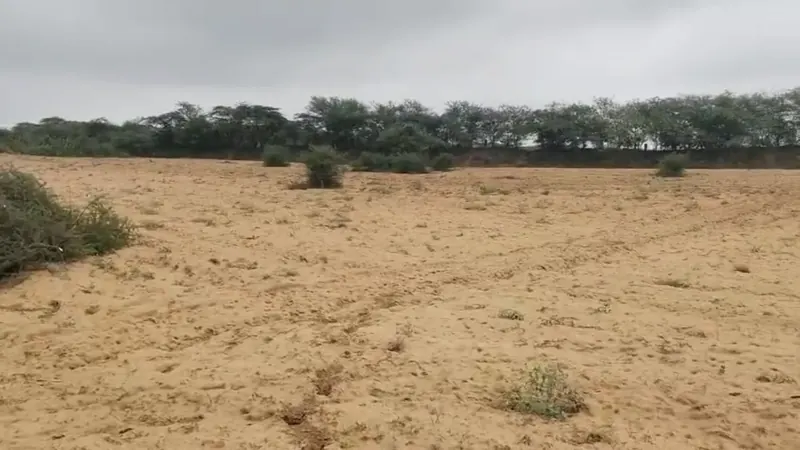
- It says nothing about any specific village. "Jaipur" here means the city people live in — not a khasra forty kilometres down NH-48. The qualities being praised are the walled city's bazaars and community life, which is close to the opposite of a farm plot on a gravel approach road.
Used honestly, the ranking is a reputational data point: it tells you Jaipur is a place people want to be, which over long periods is one of the things that keeps a region's population and economy from hollowing out. That is real. It is also slow, indirect, and impossible to price.
What actually moves land value around Jaipur
None of these are new, and none of them made headlines this month. They are what a buyer should be checking instead.
Completed infrastructure, not announced infrastructure
An announcement is a press release; an alignment notification is a document; a finished road is a road. The three get quoted at the same price by optimistic sellers. Ask which stage a project is actually at, and ask to see the notification rather than a newspaper clipping.
Approach and access rights
A plot with no recorded rasta is a plot you may not be able to reach, or build on, or resell easily — whatever the map suggests. This is checkable on the khasra map and it is one of the most common defects in the belt. We have written this up separately in approach road and access rights.
The category of the land, not just its area
Charagah (grazing), forest and certain public categories are not saleable at all, and SC/ST khatedari land carries transfer restrictions under the Rajasthan Tenancy Act that no amount of paperwork gets around. This is a hard stop, not a hurdle.
Whether conversion is realistic
Agricultural land used for a non-agricultural purpose needs conversion. Whether that is achievable for a given plot depends on its location, master-plan zoning and the authority involved — see our note on 90-A conversion in Rajasthan. "Convertible" spoken on a site visit is not a status.
Water
In this belt, a borewell's depth and yield can matter more to a farming buyer than proximity to a highway. Ask what the neighbours' wells are doing, not just what this one does.
Clean records, checked yourself
The jamabandi shows whose name the land is recorded under; the khasra map shows where it is and what its boundary is; the khasra number is the only thing joining the two. A number that appears on one and not the other is the first thing to ask about. Both are free to check on the state portals, and we have step-by-step guides for Apna Khata and Bhu-Naksha, plus a full walkthrough of how to read a jamabandi.
Where we work, and why
AgriZameen focuses on one corridor west of Jaipur — Phulera, Sambhar, Naraina and the Rupangarh highway stretch — because one belt understood properly is worth more to a buyer than five belts described from a brochure. Our west belt buyer's guide covers the corridor in detail.
We do not publish fixed prices, we do not project appreciation, and we earn a commission only when a sale completes. If you want to know what a specific plot is worth, the honest answer involves a site visit, the DLC rate, and what comparable land has actually transacted for — not a global ranking. Our note on DLC rate versus market rate explains the difference between the two numbers people confuse most often.
Before you buy anything, anywhere near Jaipur
Our fuller buying checklist for Rajasthan goes through each of these properly.
The honest conclusion
Jaipur being ranked the world's sixth happiest city is a good thing about Jaipur. It reflects heritage, food, community and a pace of life that residents actually value — the things that make people stay. Over decades, cities people want to live in tend to hold their regions together.
But it is a survey of feelings, and land is bought with documents. If a ranking is the strongest argument someone has for a plot, ask them for the jamabandi instead.
Want the corridor explained properly?
We work the Phulera–Sambhar–Naraina–Rupangarh belt and share what the records actually say — including when they say don't buy. Talk to us or browse current listings. Listing is free; we are paid only when a sale completes.
Questions people are asking
Is Jaipur really the sixth happiest city in the world?
In Time Out's World's Happiest Cities 2026 ranking, yes — sixth globally, and the only Indian city in the top ten. It is a survey of more than 24,000 residents worldwide about how they feel about their cities, not a measure of infrastructure, economy or property.
Does this mean land prices near Jaipur will rise?
It does not follow. The survey asked residents about culture, community, food and green spaces. No question in it concerned property, and nothing in it forecasts anything. Land values are market-linked and can fall as well as rise.
Which ranking is it — Time Out or the Happy City Index?
Time Out's World's Happiest Cities 2026. Several Indian outlets attributed it to the Happy City Index, which is a different ranking produced by the Institute for Quality of Life using 82 indicators. Cite Time Out.
Can a non-farmer buy agricultural land in Rajasthan?
Rajasthan does not restrict agricultural land purchase to agriculturists, unlike some states. Ceiling limits apply, and SC/ST khatedari land carries transfer restrictions. Verify the current position for your situation with an advocate before you transact.
What should I check before buying land near Jaipur?
The jamabandi on Apna Khata, the khasra map on Bhu-Naksha, the remarks column for mortgages and pending cases, the land category, recorded approach access, and completed mutation in the seller's name. Then an advocate and a CA.