- A joint khata means several people hold undivided shares in the same land. Nobody owns a specific patch until partition happens.
- Batwara (बटवारा) is the partition that turns shares into separate, identified holdings with their own khatas.
- Buying an undivided share is legal but different from buying a field — you inherit the co-ownership, and the dispute if there is one.
- Mutual partition is quick and cheap. Contested partition is neither. Find out which one you are dealing with before you commit.
In Rajasthan, joint khatas are the norm rather than the exception. Three brothers inherit from a father; the record shows all three against the same khasras. Twenty years later one of them wants to sell “his part” — and discovers that on paper, there is no his part.
What a joint khata really isसंयुक्त खाता असल में क्या है
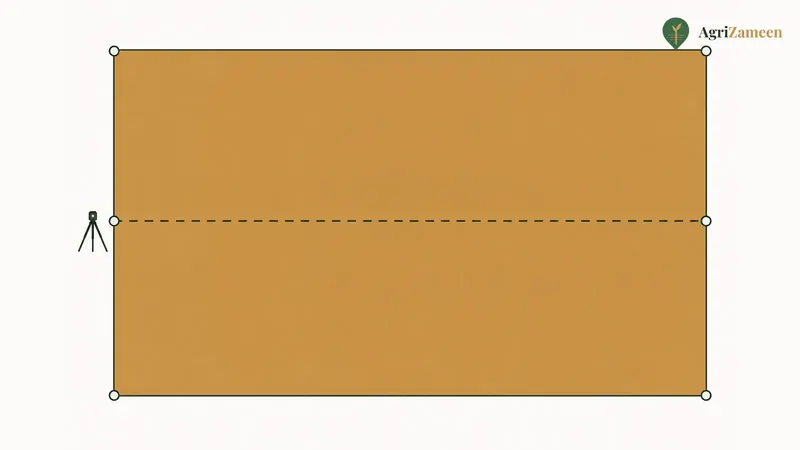
In a joint khata, each co-sharer holds a share, not a place. If three brothers hold equally in twelve bighas, each holds one-third of twelve bighas — not four specific bighas by the road, or four specific bighas near the well. Every co-sharer’s share extends over the whole holding.
This is why the boundary a seller walks you along may be a family understanding rather than a legal fact. Families often divide land informally and farm their portions for decades. That arrangement is real socially and invisible legally.
Buying an undivided shareअविभाजित हिस्सा ख़रीदना
| Buying after partition | Buying an undivided share | |
|---|---|---|
| What you get | An identified parcel with its own khata | A share in a larger holding, alongside others |
| Boundary | Defined on the record and the map | Not defined until partition |
| Who else has a say | Nobody | Every remaining co-sharer |
| Building, fencing, planting | Your decision | Contested territory in practice |
| Onward sale | Straightforward | Harder; most buyers will refuse |
| Price you should pay | Market | Meaningfully less — you are taking on the work |
Some buyers do this deliberately, at a discount, intending to drive the partition themselves. That can work. It is not a beginner’s transaction, and it needs an advocate involved from the first conversation.
The two routes to partitionबटवारे के दो रास्ते
Mutual partition. All co-sharers agree, an application goes to the revenue authority, the holding is divided as agreed, and separate khatas open. Where a family is aligned, this is comparatively quick and inexpensive. Families often formalise a division they have already been living with for years.
Contested partition. One or more co-sharers disagree — about shares, about who gets the road frontage, about who gets the well. Now the matter is decided rather than agreed, and timelines stretch from months into years. If you are buying into a khata where this is live, you are buying a dispute with land attached.
How partition actually proceedsप्रक्रिया
Documents you will needज़रूरी दस्तावेज़
A current Jamabandi showing all co-sharers and their shares. The Bhu-Naksha extract for the khasras involved. The mutation history that created the joint holding — often a succession or an old partition. Identity and relationship proof for every co-sharer. Where a co-sharer has died, the succession position for that share, which usually means dealing with warasat first. And where anyone is acting through an agent, the power of attorney, read carefully.
If you are the buyerअगर आप ख़रीदार हैं
Ask for partition to be completed before the sale. It is the cleanest outcome and it is a reasonable thing to ask. If the seller resists, understand why — sometimes it is genuine delay, sometimes it is a co-sharer who has not agreed to anything.
Where you do proceed on a joint khata, get every co-sharer to the registry and on the deed. A sale signed by one brother, with the others “on board” verbally, is the single most common way land money disappears in this state.
Want only part of a parcel that is not joint? See buying part of a parcel — the seller agrees, the part is measured, and it gets its own registry and mutation.
FAQ · अक्सर पूछे सवाल
Can one co-sharer sell his share without the others agreeing?
A co-sharer can generally deal with his own undivided share, but he cannot sell an identified piece of the land as though it were separately his. A buyer then becomes a co-sharer with the rest of the family. Most experienced buyers insist on partition first, and take legal advice before doing otherwise.
How long does partition take in Rajasthan?
Where every co-sharer agrees, it is a comparatively short revenue proceeding — often a matter of months. Where it is contested, it can run for years. The difference is agreement, not paperwork.
Is a family settlement the same as partition?
Not on the record. A family may divide land among themselves and farm accordingly for decades, but until partition is ordered and separate khatas appear in the Jamabandi, the holding remains joint in law. Get the record to match the reality.
What is the biggest mistake buyers make with joint khatas?
Accepting one co-sharer’s assurance that the others agree. Every co-sharer must be identified, must consent, and must be on the deed at registration. Verbal family consensus is not a document.