- India’s states cap how much agricultural land one family may hold. Rajasthan has such a law.
- The unit of assessment is generally the family — not the individual — so holdings across family members are counted together.
- The permissible limit is not a single figure. It varies with the quality of land and irrigation, and there are categories and exemptions.
- Land held above the ceiling can be declared surplus. That is a serious outcome, and it is a reason to establish your position before you accumulate.
People who buy one parcel rarely think about ceiling law. People who buy a third or fourth parcel should have thought about it before the second. It is one of the few land questions where the mistake is not detectable in any single transaction — only in the total.
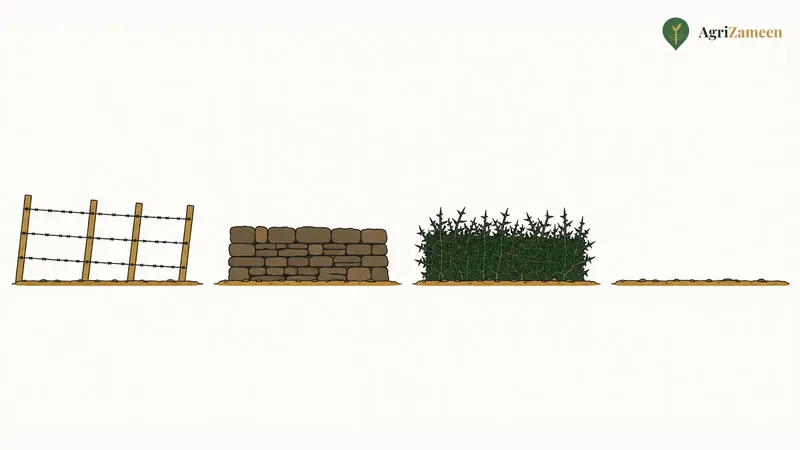
What a ceiling law doesसीलिंग क़ानून क्या करता है
Agricultural land ceiling legislation places an upper limit on how much agricultural land a family may hold, and provides machinery for declaring land above that limit as surplus. Land ceiling is a state subject, so the limit, the categories and the procedure differ from state to state.
Rajasthan has its own ceiling law for agricultural holdings. So does almost every other state, with different numbers and different definitions.
Why it existsक्यों बना
Ceiling laws came out of post-independence land reform, alongside abolition of intermediary tenures. The intent was to break very large concentrations of agricultural land and make surplus land available for redistribution. Whatever view one takes of how well that worked, the legislation remains on the books and remains applicable.
The family is the unit, not the personइकाई परिवार है
This is the point that catches people. Ceiling limits are generally assessed against a family unit rather than an individual, with the family defined in the statute — typically covering a person, their spouse and minor children, with provisions for how larger families and adult members are treated.
The practical consequence: buying land in the names of a spouse and children does not automatically create separate ceilings. Whether it does, and to what extent, depends on the statutory definitions applied to your actual family structure. That is a question for an advocate on your facts, not a website.
Why the limit is not one numberएक ही आँकड़ा क्यों नहीं
Ceiling limits are usually expressed in classes, because a hectare of assured double-irrigated land is not agriculturally equivalent to a hectare of dry rain-fed land. Broadly, the better the land and the more assured the irrigation, the lower the permitted area.
| Factor | Effect on the permitted limit |
|---|---|
| Assured irrigation, two crops a year | Lowest permitted area |
| Single-crop irrigated land | Higher permitted area |
| Rain-fed (barani) land | Higher still |
| Poor or unculturable land | Highest, with specific treatment |
| Family size and composition | Statutory adjustments may apply |
| Specified categories and exemptions | Certain holdings and purposes are treated separately |
Because the classification depends on the recorded land type, your Jamabandi entry — chahi, barani, banjad — is not just agronomic information. It affects how the land is counted. Learn to read it in our Jamabandi guide.
What happens if you exceed itसीमा पार होने पर
Land held in excess of the ceiling can be subject to proceedings and declared surplus, with consequences for the holder that are decidedly worse than a fine. Transfers made to evade the ceiling can also be examined.
For a buyer, there is a second-order risk that is easy to miss: buying from a seller whose own ceiling position is unresolved, or buying land that is already the subject of ceiling proceedings. Title problems of this kind are not visible from the boundary.
Practical steps for a buyerख़रीदार के लिए कदम
FAQ · अक्सर पूछे सवाल
Is there a limit on how much agricultural land I can own in Rajasthan?
Yes. Agricultural land ceiling legislation caps the holding of a family unit, and Rajasthan has such a law. The permitted area is not a single figure — it varies with the class of land and irrigation, family composition, and statutory categories. Get the position for your own case confirmed by an advocate.
Can I buy land in my wife’s and children’s names to get around the limit?
Ceiling limits are generally assessed against a family unit rather than an individual, with the family defined in the statute. Holdings in the names of a spouse and minor children are typically counted together, and transfers made to evade the ceiling can be examined. Do not design a holding structure from general reading — take advice.
Why does the ceiling limit depend on the type of land?
Because a hectare of assured double-irrigated land is not agriculturally equivalent to a hectare of dry rain-fed land. Ceiling laws express limits in classes, with lower permitted areas for better-irrigated land. This is one more reason the land-type entry on your Jamabandi matters.
What happens to land held above the ceiling?
It can be subject to proceedings and declared surplus. For a buyer there is also a second risk — purchasing from a seller whose ceiling position is unresolved, or land already under proceedings. Read the Jamabandi remarks and mutation history, and have an advocate examine the title.