A sanctioned road is one of the most reliable ways to sell a parcel badly. The announcement is real, the alignment is real, and the thing a buyer assumes it means — that this land now has access — is a separate question with a separate answer. Here is what was announced and where the gap sits.
What was announced
ETGovernment reported on 3 September 2026 that around 3,219 km of roads are to be constructed under the fourth phase of the Pradhan Mantri Gram Sadak Yojana, of which 1,500 km is targeted for completion during 2026-27 with the remainder to follow the year after. The same meeting covered the Atal Pragati Path Scheme, under which cement concrete roads are being built in rural areas with a population above 5,000, and Chief Minister Bhajan Lal Sharma directed officials to prioritise road connectivity to schools, hospitals and other public institutions.
Alongside the roads: Atal Gyan Kendras to be established in phases at every Gram Panchayat headquarters, carrying libraries and e-libraries and offering competitive examination preparation, career guidance, employment-oriented training and information on government services; and sports grounds to be developed at Gram Panchayat level.
The distinction that costs money
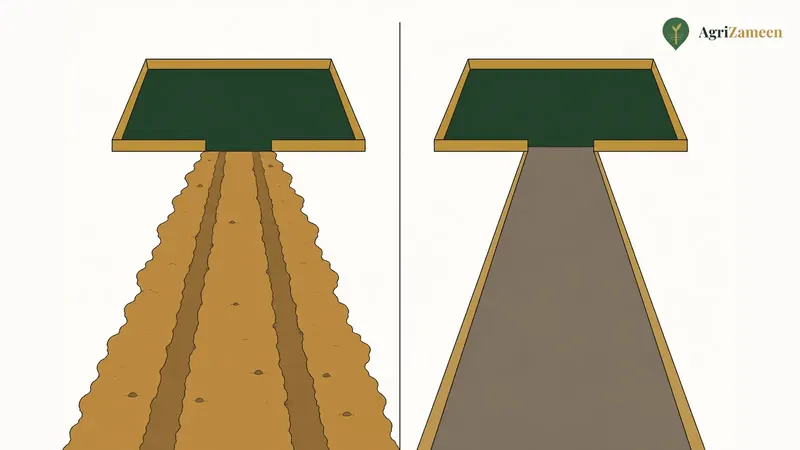
A public road reaching a village is a connectivity fact. Legal access from that road to a specific parcel is a record fact, and the two are not the same thing. A parcel can sit four hundred metres from new tarmac and still be landlocked in every sense that matters when you try to build, finance or resell it.
What you are looking for is a rasta — a right of way that exists on the record and reaches the khasra you are buying. We have written the long version of this in our guide to approach roads and access rights, and it remains the single most common gap between what a buyer believes they bought and what the paper gives them.
What to check before you price connectivity in
- Is the road sanctioned, tendered, or built? A target for 2026-27 is a target. Ask what stage this specific stretch is at rather than what the state announced in aggregate.
- Does the record show a rasta reaching your khasra, or does the approach run across someone else’s field by long habit? Habit is not a right, and it ends when the neighbour sells.
- Where does the right of way actually fall? An alignment that clips the parcel is a different proposition from one that runs past it, and both are different from one that takes part of it.
- Is the parcel inside a planning jurisdiction whose rules govern what frontage lets you do? Being on a road is not permission to use the land differently.
Why this matters in this belt specifically
The Phulera–Sambhar–Naraina–Rupangarh corridor already carries more infrastructure narrative than most of Rajasthan — freight, highway and now a rural roads programme on top. Narrative is exactly the condition under which access gets assumed rather than checked. Our focus belt page sets out what is actually established here, and our note on corridor red flags covers how announcements get resold as certainties.
We publish no projection of what any road does to land prices in any village, because we do not have one that would survive contact with the evidence.
FAQ · अक्सर पूछे सवाल
Does a new PMGSY road mean my land now has legal access?
No. A public road reaching a village is a connectivity fact; legal access from that road to your specific khasra is a record fact. You need a rasta that exists on the record and reaches the parcel you are buying.
How much of the 3,219 km is being built this year?
ETGovernment reported on 3 September 2026 that 1,500 km is targeted for completion during 2026-27, with the remaining work to follow in the year after.
Will a new road raise the price of nearby agricultural land?
We publish no projection of what any road does to land prices in any village. Ask what stage the specific stretch is at, and check access on the record, before you price connectivity into an offer.