Guide record · एक नज़र में
- Core logic
- Fixed supply, rising demand
- Return layers
- Use + income + appreciation
- Tax angle
- Agri income exempt u/s 10(1)
- Liquidity
- Low — plan 5–15+ years
- Biggest risk
- Bad title, not bad market
- Golden rule
- Due diligence before rupee one
Every generation of Indian savers rediscovers the same quiet asset. Stocks are exciting, gold is traditional, FDs are safe — and then someone's grandfather's five bighas on the edge of town turns out to be worth more than all three. This is not magic. It is the predictable result of a few forces that favour land over long horizons. Here is the case, stated honestly — including the parts sellers rarely mention.
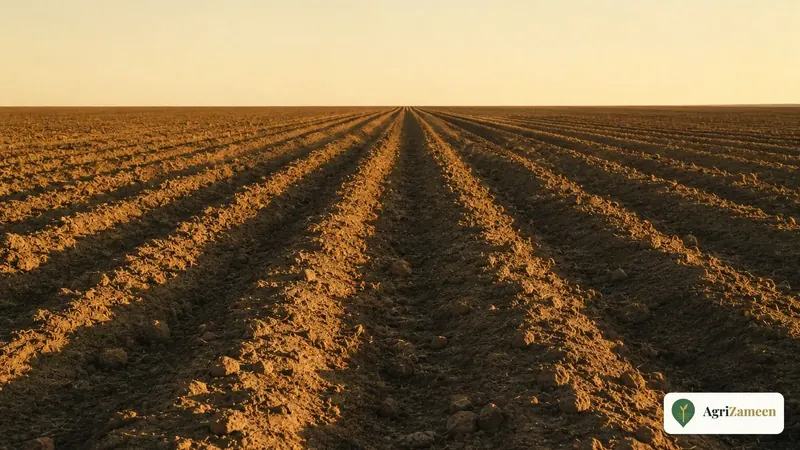
Force 1: They are not making more of it ज़मीन बनाई नहीं जा सकती
India's net sown area has been essentially flat at around 140 million hectares since the 1970s — the country long ago reached the horizontal limits of farm expansion. Meanwhile the share of land under agriculture has slid for decades as cities, roads and industry consume the edges, with millions of hectares moving to non-agricultural use. Fixed supply meeting growing demand is the oldest price logic there is — explored fully in our scarcity deep-dive.
Force 2: Demand compounds from many directions मांग चारों तरफ़ से
Food demand rises with population and incomes. Cities need peripheral land. Highways and industrial corridors need alignments. Renewable energy parks need acreage. Every one of these demands bids, directly or indirectly, for the same finite farmland — particularly on the urban edge and along new corridors.
Force 3: Three layers of possible return रिटर्न की तीन परतें
- Use value: cultivation, lease, orchard, allied activity — cash flow while you hold, with agricultural income exempt from income tax under Section 10(1) when genuinely agricultural.
- Optionality value: the possibility (never the certainty) of higher-value use later — conversion where master plans permit, or simply riding a growing settlement's edge.
- Appreciation: the layer everyone talks about, and the least controllable. Corridor and peri-urban plots have historically re-rated when infrastructure arrives; remote plots can sit unchanged for decades.
Force 4: Behavioural fit for patient money धैर्य वालों का एसेट
Illiquidity, farmland's most criticised trait, quietly protects many owners from their own worst instinct — panic selling. You cannot sell a khasra with an app at 2 a.m. Families end up holding through cycles, which is exactly how land historically rewarded owners.
Now the other side of the ledger अब दूसरी तरफ़ का हिसाब
- Title risk dwarfs market risk. Most farmland losses in India come from disputed ownership, missing co-owner consent or encroachment — not falling prices. The due-diligence checklist is your real return protector.
- No cash-flow guarantee: monsoon, tenants and crop prices all vary.
- Regulatory boundaries: ceilings, eligibility rules, conversion norms and taxation of gains differ by state and change over time.
- Exit takes time: months, sometimes years, at the market's chosen price.
Our position: agricultural land rewards informed, patient, engaged owners. Buy for the decade, verify like a lawyer, hold like a farmer — and never on the promise of assured returns, because nobody can honestly make that promise.
Serious buyers compare rates in one unit. Whether the quote is per bigha, per acre or per hectare, normalise it instantly with the free AgriZameen Land Area Converter before negotiating.
FAQ अक्सर पूछे जाने वाले सवाल
Is agricultural land a good investment in India?
It can be a strong long-term holding when the title is clean, the location has genuine demand drivers, and the buyer can hold patiently. It is a poor fit for anyone needing quick liquidity or assured returns — no land outcome is guaranteed.
What returns can I expect from farmland?
There is no fixed answer. Appreciation depends entirely on location, infrastructure, records and timing; reported corridor appreciation figures vary widely and past trends do not guarantee future results. Treat any 'assured return' pitch as a red flag.
Why do wealthy investors buy farmland?
Industry reports note growing interest from HNIs and professionals in farmland as an alternative asset — typically small-acreage formats combining lifestyle use, some yield and long-term holding — alongside diversification away from purely financial assets.
Can NRIs invest in Indian agricultural land?
Not directly — FEMA bars NRIs/OCIs from purchasing agricultural land, though inheritance is allowed. Indirect exposure structures are evolving; take professional advice before any workaround.
Reviewed July 2026. Land law, stamp duty, DLC rates and departmental procedure change without notice — confirm the current position on the official state portal, and with a licensed advocate or CA, before you act. Nothing here is legal, tax or investment advice, and no return is assured.